4×4 inches
Acrylic on paper
Signed and dated on the back
This piece is part of a series of 9 paintings that were created as I processed my emotions about my grandma’s life, her experiences with Alzheimers disease, and her passing. I found a bit of comfort in color and subject: in rendering the simple warmth of everyday objects like a cup of tea or a bouquet of flowers. These works are meant to honor simple moments as they come — even those that are soon-to-be forgotten or those that have long since passed — as they are all the embedded makings of a precious life.
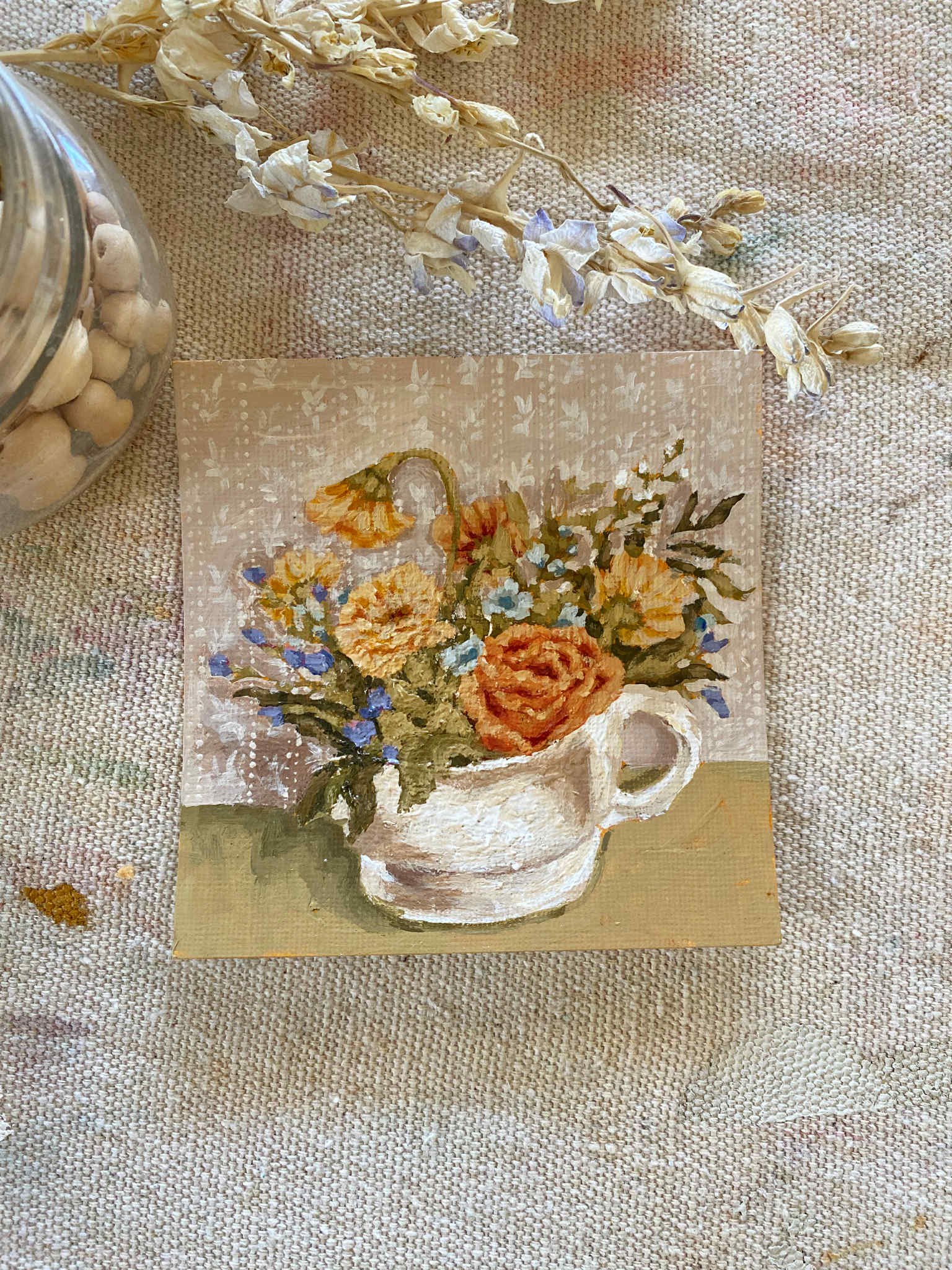
This painting, Like Porcelain, features a vintage teacup holding an arrangement of flowers in varied soft earth tones. This piece is meant to honor a token of a loving heritage, much like that found in a family’s old tea set. The work imagines a teacup finding its place in an entirely new function as a vase — something more symbolic and removed from everyday life than the often-held, reheated, and cleaned teacup it once was. This gives a subtle nod to the experience of aging, and how even as one’s function changes, their value does not: the beauty of the piece not only remains, but strengthens as it becomes a statement piece, drawing everything together at its center as a vase on a table anchors what surrounds it.
4×4 inches
Acrylic on paper
Signed and dated on the back
This piece is part of a series of 9 paintings that were created as I processed my emotions about my grandma’s life, her experiences with Alzheimers disease, and her passing. I found a bit of comfort in color and subject: in rendering the simple warmth of everyday objects like a cup of tea or a bouquet of flowers. These works are meant to honor simple moments as they come — even those that are soon-to-be forgotten or those that have long since passed — as they are all the embedded makings of a precious life.
This painting, Like Porcelain, features a vintage teacup holding an arrangement of flowers in varied soft earth tones. This piece is meant to honor a token of a loving heritage, much like that found in a family’s old tea set. The work imagines a teacup finding its place in an entirely new function as a vase — something more symbolic and removed from everyday life than the often-held, reheated, and cleaned teacup it once was. This gives a subtle nod to the experience of aging, and how even as one’s function changes, their value does not: the beauty of the piece not only remains, but strengthens as it becomes a statement piece, drawing everything together at its center as a vase on a table anchors what surrounds it.